
Choosing the right access door or hatch is one of those decisions that seems simple on the surface but has significant long-term consequences for your project. Whether you are a contractor, architect, or building owner, selecting the wrong product can lead to costly rework, compliance issues, and ongoing maintenance headaches.
Understanding the Types
Wall Access Doors
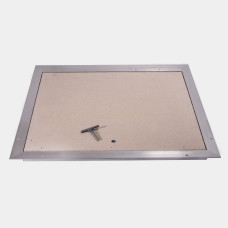
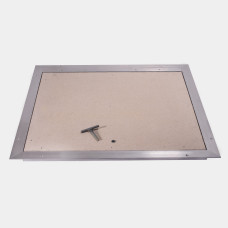
Wall access doors provide concealed access to pipes, electrical panels, and valves behind finished wall surfaces. They are installed in drywall, masonry, or tiled walls. Push-to-open magnetic latches leave no visible handle, maintaining a clean aesthetic that blends into the surrounding wall finish.
SANLUK wall access doors are engineered for concealed installation: the frame accepts plaster, tile, or paint directly, making the hatch virtually invisible once the room is finished.
Floor Access Hatches
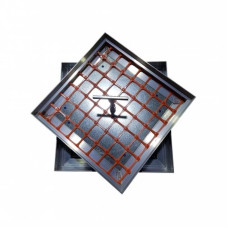
Floor hatches must support foot traffic while providing access to basements, crawl spaces, and below-floor utilities. They are available with recessed trays that accept floor finishes — tiles, parquet, laminate, concrete, carpet — making them nearly invisible. Gas struts counterbalance the lid weight, allowing easy one-hand opening regardless of the infill material weight.
Ceiling and Loft Hatches
Ceiling hatches give access to roof spaces and ceiling voids containing HVAC equipment and electrical wiring. Thermal insulation is standard on most SANLUK models. Fire-resistance-rated options are available for fire-compartmented buildings.
Outdoor and Roof Hatches
Outdoor hatches must withstand rain, UV, freeze-thaw cycles, and sometimes vehicle loads. Corrosion-resistant materials, drainage channels, weatherproof seals, and anti-slip surfaces are non-negotiable. For roof hatches, thermal insulation, wind resistance, and emergency egress capability are the critical specifications.
Material Selection: Aluminium vs Steel
Aluminium is the natural choice for wet rooms, pools, food processing environments, and outdoor applications. It is corrosion-resistant without surface treatment, one-third the weight of steel, and compatible with all common finishing materials.
Steel excels in high-load applications and fire-rated constructions. Its superior strength makes it the preferred material for heavy-duty floor hatches, driveway covers, and EI 30/EI 60 fire-rated doors. Galvanised steel provides adequate corrosion protection for indoor applications.
Key Specification Checklist
- Installation type — wall, floor, ceiling, or outdoor
- Load class — from A15 (pedestrian) to D400 (heavy vehicles); for indoor floors typically 150–400 kg/m²
- Fire resistance — EI 30 or EI 60 required for fire-compartmented construction
- Environment — wet, humid, chemically aggressive, or outdoor
- Opening mechanism — push-to-open, gas struts, spring hinges, or key lock
- Floor finish thickness — determines recess depth and gas strut specification
Installation Best Practices
Always prepare the opening 5–10 mm larger than the frame. For floor hatches, set the frame before laying the floor so the finished surface is perfectly flush. Check hinge alignment before plaster or adhesive sets. Use the full specified anchor pattern — reducing anchors compromises the structural rating of the installation.
Why Quality Matters
Access doors are invisible once installed, making it tempting to specify the cheapest option. But the consequences of failure — water damage, fire spread, or structural collapse — are disproportionately expensive. SANLUK products are engineered and tested as complete systems, designed for 10–25 years of service with minimal maintenance.
Always request third-party test certificates. For fire-rated products, the certificate must name the specific model and the wall or floor construction types in which it has been tested.
Questions? Contact our technical team at info@sanluk.lv or +371 22323218.