
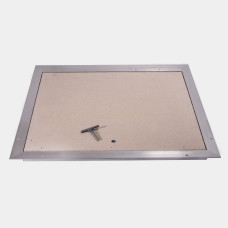
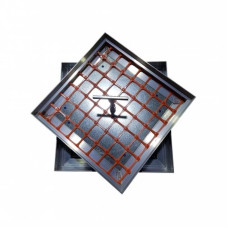
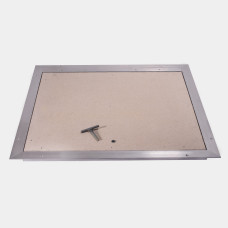
Choosing the right access door or hatch is one of those decisions that seems simple on the surface but has significant long-term consequences for your project. Whether you are a contractor, architect, or building owner, selecting the wrong product can lead to costly rework, compliance issues, and ongoing maintenance headaches. This guide walks you through everything you need to know.
Understanding the Different Types of Access Doors
Access doors and hatches fall into four broad categories based on where they are installed. Each category comes with its own set of requirements and constraints.
Wall Access Doors
Wall access doors are the most common type, used to provide concealed access to pipes, electrical panels, valves, and other infrastructure hidden behind finished wall surfaces. They are typically installed in drywall, masonry, or tiled wall surfaces.
Key considerations for wall access doors include the surface finish — whether the door will be flush-plastered, tiled over, or left as a visible panel — and the locking mechanism. Push-to-open magnetic latches are popular because they leave no visible handle, maintaining a clean aesthetic. For high-security areas, key-lock or cam-lock options are available.
SANLUK wall access doors are designed for concealed installation, meaning the door frame accepts plaster, tile, or paint directly, making the hatch virtually invisible in the finished wall.
Floor Access Hatches
Floor hatches are engineered to blend into the floor surface while providing safe, load-bearing access to basements, crawl spaces, drainage systems, and below-floor utilities. The design challenge is significantly greater than for wall doors because the hatch must support foot traffic — and in some cases, vehicle loads.
Floor hatches are available with recessed trays that accept floor finishes such as tiles, parquet, laminate, concrete, or carpet, making them nearly invisible in the finished floor. Gas strut opening mechanisms are particularly valuable here: they counterbalance the weight of the lid and the floor covering, allowing easy one-hand opening regardless of how heavy the infill material is.
When selecting a floor hatch, always confirm the load rating matches your application. A residential dwelling requires a very different load class than a commercial kitchen or an industrial facility.
Ceiling and Loft Hatches
Ceiling hatches provide access to roof spaces, loft areas, and ceiling voids where HVAC equipment, electrical wiring, or structural elements are housed. Thermal performance is the primary concern here: an uninsulated ceiling hatch creates a cold bridge that can significantly increase heating costs and lead to condensation problems.
SANLUK ceiling hatches include thermal insulation as standard on most models, and many are available with fire-resistance ratings for use in fire-compartmented buildings. The frame is designed to sit flush with the finished ceiling surface, with the lid opening smoothly on hinges and staying open via a stay mechanism while you work.
Outdoor and Roof Hatches
Outdoor applications demand the highest level of durability. Hatches installed in exterior floors, terraces, driveways, or on flat roofs must withstand rain, UV radiation, freeze-thaw cycles, and — in the case of driveway hatches — substantial vehicle loads.
Materials must be corrosion-resistant throughout, not merely surface-treated. Drainage channels, weatherproof seals, and anti-slip surfaces are non-negotiable features. For roof hatches, thermal insulation, wind resistance ratings, and the ability to open safely from inside in an emergency are the critical specifications.
Choosing the Right Material: Aluminium vs Steel
The two dominant materials for access door construction are aluminium and galvanised or stainless steel. Each has distinct advantages depending on the application.
Aluminium
- Corrosion resistance: Aluminium forms a natural oxide layer that protects against rust without any surface treatment. This makes it the material of choice for wet rooms, swimming pools, food-processing environments, and any outdoor application.
- Weight: Aluminium is approximately one-third the weight of steel. For large ceiling hatches or floor hatches with heavy tile infill, lighter frames reduce structural load and make installation easier.
- Thermal conductivity: Aluminium conducts heat more readily than steel. For thermally critical applications such as insulated ceiling hatches, this must be managed with thermal breaks in the frame design.
- Finish options: Aluminium can be anodised or powder-coated in a wide range of colours and is fully compatible with plaster and tile adhesive.
Steel
- Strength: Steel offers superior strength-to-section ratio, making it the preferred choice for high-load applications such as heavy-duty floor hatches and outdoor manhole covers rated to vehicle traffic.
- Fire resistance: Steel is inherently non-combustible and is used in fire-rated access door constructions. Achieving EI 30 or EI 60 ratings is more straightforward with steel than with aluminium.
- Cost: For standard indoor applications without demanding environmental conditions, galvanised steel is typically more cost-effective than aluminium.
- Maintenance: Surface-treated or galvanised steel requires periodic inspection in humid or chemically aggressive environments to prevent rust.
Key Features to Evaluate
Fire Resistance Rating
If your project involves fire-compartmented construction — including apartment buildings, hospitals, schools, hotels, and commercial premises — some access doors will need to carry a fire-resistance classification. The most common ratings are EI 30 (30 minutes integrity and insulation) and EI 60 (60 minutes). Always verify whether the required rating applies to the door leaf only or to the complete installed assembly including the surrounding structure.
Fire-rated access doors must be installed strictly in accordance with the manufacturer's installation instructions and in the specific construction types for which they are tested. An EI 60 door installed incorrectly in an untested wall construction provides no tested fire resistance at all.
Waterproofing and IP Rating
For hatches in wet areas — including shower rooms, plant rooms, pool surrounds, and outdoor installations — the level of water ingress protection matters. Check whether the product has a declared IP rating or a specific waterproofing test result. For floor hatches installed in areas subject to flooding or hydrostatic pressure, look for models with compression seals and drainage channels integrated into the frame.
Load Capacity
Load capacity is typically classified according to European standard EN 124 for outdoor covers, or expressed in kg/m² for indoor floor hatches. The load classes range from A15 (pedestrian only) through to D400 (heavy goods vehicles). For residential indoor use, a 150 kg/m² rating is generally sufficient. Industrial floors and driveways require significantly higher ratings.
Do not overlook the dynamic load contribution from the floor finish itself. A 20 mm thick tile floor covering in a 500×500 mm recessed hatch adds considerable weight, and gas struts must be specified to match the combined weight of the lid and the infill.
Opening Mechanism
The opening mechanism should match the frequency of access and the user's physical capability. Options include:
- Push-to-open magnetic latch — ideal for wall doors in residential and commercial interiors where a handle-free finish is desired.
- Gas struts — essential for heavy floor hatches. They counterbalance the lid weight, prevent sudden closure, and make one-person operation feasible.
- Spring hinges — a lower-cost alternative to gas struts for lighter lids.
- Key locks and padlock provisions — for areas requiring restricted access.
Installation Tips from the Professionals
Even the best product will underperform if installed incorrectly. Here are the most important points to get right on site:
- Prepare the opening accurately. The frame must sit squarely in the opening. Allow 5–10 mm clearance around the frame for adjustment and grouting. An out-of-square opening will cause the door to bind or gap.
- For floor hatches, install before the floor finish. The recess tray must be set at the correct height so the finished floor surface is flush with the lid. Get this wrong and you either have a trip hazard or a sunken recess that traps water and debris.
- Check the hinge alignment. On wall and ceiling doors, slightly misaligned hinges cause the door to twist in the frame. Adjust before the plaster or tile sets.
- Follow the specified anchor pattern. Anchor points are designed to distribute loads correctly. Using fewer anchors than specified, or substituting anchor types, will compromise the structural performance of the installation.
- Protect the frame during construction. Tape over the frame faces before plastering or tiling to avoid adhesive contamination that interferes with the door seal and finish.
Why Quality Matters More Than Price
Access doors are largely invisible once installed — which is precisely why it is tempting to specify the cheapest available option. However, the consequences of a failed access door are disproportionately expensive: water damage from a leaking floor hatch, a fire spreading through an inadequately rated wall door, or a contractor injury from a floor hatch that cannot support the declared load are all scenarios where the initial saving becomes irrelevant.
Quality access doors from manufacturers like SANLUK are engineered and tested as complete systems. The hinges, frame, lid, seals, and locking mechanism are designed to work together over a product life of 10–25 years with minimal maintenance. Cheaper products often substitute materials, reduce steel thickness, or omit features such as drainage channels and adjustable hinge pins that make a significant difference in real-world durability.
When evaluating products, ask for third-party test certificates rather than accepting self-declared specifications. For fire-rated products, the certificate should name the specific product model and the construction types in which it has been tested.
Summary: Your Access Door Selection Checklist
- Determine the installation type: wall, floor, ceiling, or outdoor
- Identify the required load class and verify the floor finish weight if applicable
- Check whether a fire-resistance rating is required and for which construction types
- Assess the environmental conditions: wet, humid, chemically aggressive, or outdoor
- Choose aluminium for corrosion-prone environments; steel for high-load or fire-rated applications
- Match the opening mechanism to the frequency of use and the weight of the lid
- Request test certificates and installation instructions before ordering
- Plan the installation sequence to avoid costly rework
If you need help selecting the right product for your project, our technical team is available to advise. Contact us at info@sanluk.lv or call +371 22323218.