
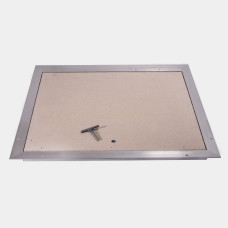
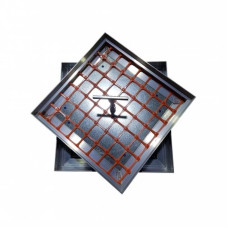
When specifying access doors, the choice between aluminium and steel is one of the first decisions you will make. Both materials have genuine strengths, and the right answer depends on your specific application, environment, and performance requirements. This article gives you the full picture.
The Case for Aluminium
Natural Corrosion Resistance
Aluminium forms a stable oxide layer on its surface when exposed to air. This layer is self-repairing — if the surface is scratched, the oxide reforms spontaneously. This makes aluminium inherently resistant to rust without any surface coating. For access doors installed in wet rooms, shower enclosures, swimming pool areas, kitchens, or any outdoor location, aluminium is the material of choice.
Lightweight Construction
Aluminium is approximately one-third the density of steel. For large ceiling hatches or floor hatches with significant floor covering infill, the lower frame weight reduces structural loading and makes installation easier. A lighter lid also means gas strut specifications can be reduced, lowering total system cost.
Compatibility with All Finishes
Aluminium is fully compatible with tile adhesive, plaster, paint, and powder coat. It can be anodised in a range of colours and does not bleed rust stains onto surrounding surfaces over time. For high-specification interiors where aesthetics matter, aluminium is the cleaner long-term choice.
Limitations of Aluminium
- Lower strength-to-section ratio than steel — for the same load capacity, aluminium sections are thicker and deeper
- Higher thermal conductivity — without a thermal break in the frame design, aluminium ceiling hatches create a more significant cold bridge than equivalent steel products
- Higher material cost — aluminium access doors typically cost 15–30% more than equivalent galvanised steel products
- Fire resistance is harder to achieve — EI 30/EI 60 ratings are possible but require more complex construction
The Case for Steel
Superior Load Capacity
Steel's high yield strength means that for a given section depth, it carries significantly more load than aluminium. This makes steel the natural choice for heavy-duty floor hatches rated to vehicle traffic (D400), industrial floor applications, and any situation where the structural load demands cannot be met by aluminium within practical frame dimensions.
Fire Resistance
Steel is non-combustible and has excellent performance at elevated temperatures relative to its strength loss profile. This makes it the base material for the majority of EI 30 and EI 60 fire-rated access door constructions. If your project requires a certified fire-rated access door, the product is almost certainly steel.
Cost
For standard indoor applications without demanding environmental conditions — a typical utility room, riser cupboard, or below-stair storage — galvanised steel is significantly cheaper than aluminium for equivalent performance. If the access door will be hidden behind a plasterboard reveal and painted, the material finish matters much less than for a visible installation.
Limitations of Steel
- Susceptible to corrosion in wet or humid environments if the surface treatment is damaged — scratches and cut edges on galvanised steel will eventually rust
- Heavier — a large steel floor hatch lid is significantly heavier than the aluminium equivalent, which affects gas strut specification and user effort
- Stainless steel — the premium corrosion-resistant steel option — is considerably more expensive than aluminium for most door sizes
Head-to-Head Comparison
- Wet rooms, pools, outdoor: Aluminium wins — no corrosion risk, no maintenance
- Fire-rated construction (EI 30/EI 60): Steel wins — better certified performance
- Heavy vehicle loads (D400): Steel wins — structural efficiency
- Residential interiors, standard humidity: Either works — cost and aesthetics decide
- Large ceiling hatches: Aluminium preferred — lower dead load on the ceiling structure
- Food processing, chemical environments: Aluminium or stainless steel — galvanised steel unsuitable
Our Recommendation
When in doubt, choose aluminium for anything exposed to moisture, chemicals, or outdoor conditions. Choose steel (or specify stainless steel) when fire resistance, extreme load capacity, or budget is the primary driver. For most standard indoor applications, either material will give decades of reliable service — let aesthetics and price guide the final decision.
SANLUK offers both aluminium and steel access doors across all product families. Contact us at info@sanluk.lv to discuss which material is right for your project.